Why Real Estate Agents Need a website in 2026: The Complete Guide
Most agents don’t realize they’re invisible where buyers actually search. This post hits the gap between effort and visibility.

Nusrat Labiba Chowdhury
24 Mar, 2026
real estate, realtor tips, website, lead generation, digital marketing

There is a moment that happens to almost every independent real estate agent.
Business is going well. Referrals are coming in. The phone rings often enough. Things feel stable. So, the website keeps getting pushed to the back burner. "I'll get to it when things slow down."
Then things slow down.
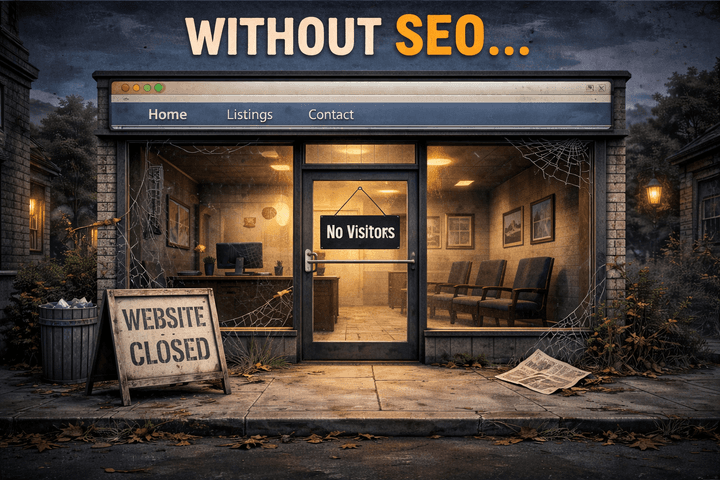
And suddenly there is no website, no Google ranking, no digital presence and no pipeline. Just silence.
This is the story of thousands of talented, hardworking real estate agents every single year. Not because they aren't good at what they do. But because they built their business on a foundation that wasn't truly theirs.
In 2025, a real estate agent without a website is like a business without a signboard. You might be the best in the room. But if no one can find you, it doesn't matter.
This guide breaks down exactly why a website is no longer optional for real estate agents and what happens when you build one the right way.
The Numbers Every Realtor Needs to See
Before anything else, let's talk about where buyers and sellers are actually spending their time.
- 97% of homebuyers use the internet during their home search.
- 76% of buyers use a mobile device to search for homes.
- Over 50% of buyers find the home they eventually purchase online.
- Agents with a strong online presence generate 2x more leads than those without one.
These aren't speculative trends. This is buyer behavior right now. The market has already shifted. The question is whether your business has shifted with it.
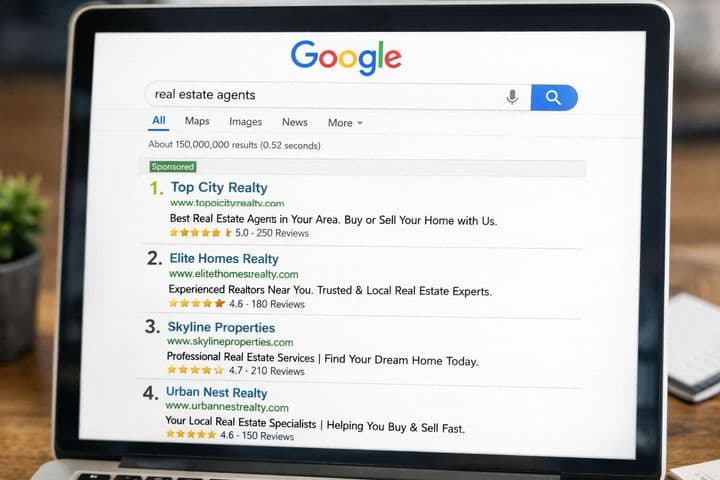
When a potential buyer or seller decides they need a real estate agent, the first thing most of them do is not call a friend. They Google. They look at profiles. They read reviews. They visit websites. They make a judgment call about who seems credible before they ever reach out.
If you are not showing up in that process, someone else is.
Why Referrals Alone Are Not Enough?
Referrals are one of the most powerful tools in real estate. A warm introduction from a trusted friend carries weight that no ad can replicate. This is not an argument against referrals.
This is an argument against referrals being your only strategy.
Here is the reality of a referral-only business model:
You cannot control the volume
Some months, three referrals land in the same week. Other months, nothing comes in for six weeks straight. You are entirely at the mercy of other people's timing. That is not a business model that is hope.
You cannot scale beyond your network.
Your network has a ceiling. Once you have exhausted your first and second-degree connections, growth stalls. You end up competing for the same small pool of potential clients that everyone else in your circle already knows about.
You cannot build equity in a network you do not own
If you are relying on your brokerage's reputation, your brokerage's website, or your brokerage's referral network none of that transfers if you ever move, go independent, or rebrand. You are building someone else's asset.
A website, on the other hand, is entirely yours. Every lead it generates, every Google ranking it earns, every piece of content on it that belongs to you permanently.
What a Real Estate Agent Website Actually Does for You
A lot of agents think a website is just a digital business card. A place to put your photo, your contact number, and your listings. That is a waste of a website.
A well-built real estate agent website is a full lead generation system working around the clock. Here is what it actually does:
It makes you findable on Google
When someone in your city types "best realtor in [city]" or "homes for sale near me" or “real estate agent who specializes in first-time buyers” your website is what gets you into those results. Without a website, you simply do not appear. SEO is not magic. It is consistency. The earlier you build your site and start adding relevant content, the faster Google starts sending you organic traffic for free.
It builds trust before you say a word
People make snap judgments online. Within seconds of landing on your website, a visitor decides whether you look credible. A professional website with clear messaging, genuine client testimonials, a strong bio, and real listing data tells a potential client: this person is serious, experienced, and worth calling.
Agents without a website or with a poorly maintained one lose leads at this stage every single day without ever knowing it.
It captures leads while you sleep
A website with a contact form, a home valuation tool, or a lead magnet works 24 hours a day. Someone browsing listings at midnight can submit their information and wake up to find your follow-up in their inbox. No other marketing channel does this as passively or as consistently.
It showcases everything in one place
Your past sales. Your areas of expertise. Your client reviews. Your neighborhood knowledge. Your listing portfolio. A website brings all of this together in one place that you control completely — no algorithm deciding who sees it, no platform changing the rules.
The Online Presence Stack: Beyond Just a website
A website is the foundation. But a complete online presence for a real estate agent in 2026 involves a few layers working together.
Google Business Profile
Free to set up. Extremely high impact. A Google Business Profile gets your name, photo, reviews, and contact information into the Google Maps results when someone searches for a realtor in your area. Most agents either skip this or set it up once and never touch it again. Keeping it updated with posts, photos, and responding to reviews significantly boosts your local visibility.
LinkedIn and Social Media
LinkedIn is the most underused platform in real estate. Independent agents who consistently post market insights, client wins, and educational content build authority with both buyers and sellers — and attract referrals from professionals like mortgage brokers, attorneys, and financial advisors who interact with homebuyers every day.
Instagram and Facebook still hold strong for reaching residential buyers and sellers directly, especially with video content showing local market knowledge.
SEO Blog Content
Publishing regular blog posts on your website neighborhood guides, home buying tips, market updates,
FAQs — tells Google that your site is active and relevant. Over time, this content ranks for long-tail search terms and brings in consistent traffic from people actively looking for exactly what you offer. It is one of the highest ROI marketing activities available to an independent realtor.
Common Mistakes Independent Realtors Make with Their Online Presence
Even agents who understand the value of a website often fall into the same traps:
- Waiting too long to start. SEO takes months to build. The best time to launch your website was two years ago. The second-best time is today.
- Building a site and never updating it. An outdated website signals inactivity — to Google and to potential clients. Fresh content is essential.
- Using only the brokerage website. That site builds the brokerage's brand, not yours. If you ever leave, everything stays behind.
- No clear call to action. A website that does not tell visitors what to do next loses leads. Every page should have one clear next step — schedule a call, request a valuation, download a guide.
- Ignoring mobile optimization. Over 70% of real estate searches happen on mobile. If your site is not fast and clean on a phone, you are losing people before they even read a word.
What Happens When You Get This Right
The agents who invest in their website and online presence early stop competing on the same playing field as everyone else.
They stop cold calling. They stop chasing leads. They stop panicking during slow months.
Instead, they get inbound inquiries from people who already Googled them, read their reviews, looked through their listings, and decided before a single conversation that they want to work with this person.
That shift from chasing business to attracting it is what separates the agents who are always grinding from the ones who are consistently growing.